Armor
Copyright Chris Tozer © 2018
Edited by Terence Wynne for The Guild Companion
"Historically, there are dozens of armor pieces designed to protect different areas of the body."
Locational Armor
A set of Armor is composed of several pieces; each piece designed to protect a specific part(s) of the body from damage. Below is a list of the common terms used to describe each piece of Armor and its basic function. This is not a complete list of Armor pieces—historically, there are dozens of Armor pieces designed to protect different areas of the body. It would be impossible to list them all.
These rules have simplified the armor pieces, to create a simple, flexible system of customizing armor. Also note that armor pieces do overlap one another around their edges; this is how they are designed.
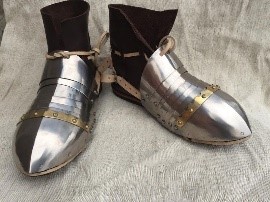
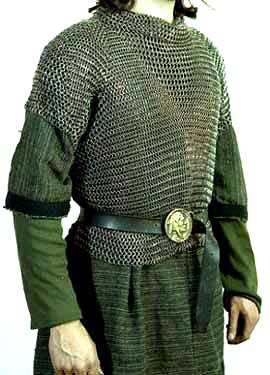
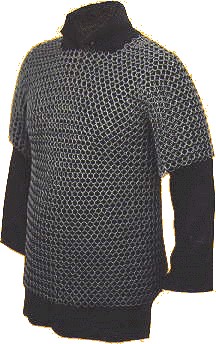
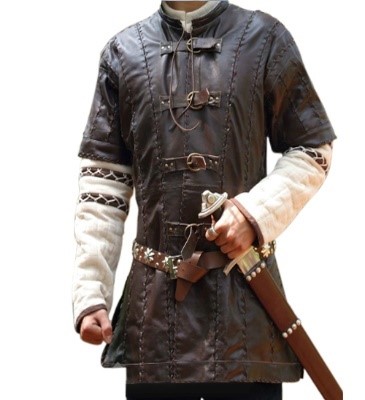
Table 3.2 below shows you which pieces cover which body parts.
Typically, the AT1 – AT20 Armor Types, listed above in Table 2.0 the various core Armor Types provide protection over the largest regions of the body: the torso, abdomen, and groin. The 1 – 20 ATs listed above cover the torso and certain ATs provide protection for arms, legs, groin and other parts of the body (listed in the AT description).
Other pieces of armor listed below, such as helms, bracers, greaves, gorgets, and others all work to protect specific parts of the body. However, these other pieces can be added to the 1 – 20 core Armor Types to provide greater overall protective quality of the body and give a bonus to a character’s Defensive Bonus.
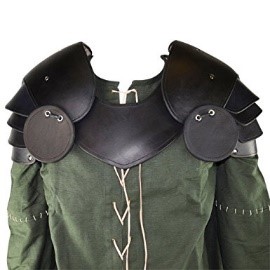
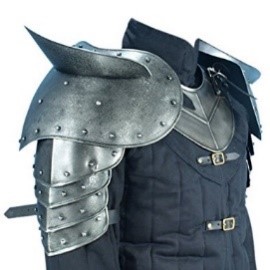
Should a character wish to wear torso protection, for example a Leather Jerkin (AT5), but protect his neck with a gorget, his lower arms with bracers or his shoulders with Pauldrons, he can do so and benefit from the addition to his defensive bonus afforded by this additional armor.
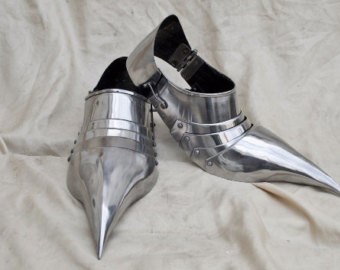
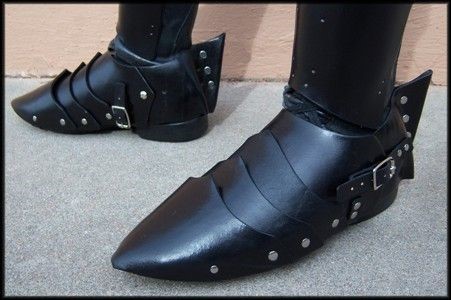
Equally a character may opt not to wear one of the core Armor Types at all and instead choose to use either a set of metal bracers, leather pauldrons or sabatons. Such a character would not be considered to be wearing one of the core ATs but he would benefit from the items’ addition to his defensive bonus.
However, he also must deal with the resulting penalty to his maneuvering and quickness abilities because of wearing these additional pieces of armor.
| Armor Term | Examples: Different Types of Materials/Styles | ||
|---|---|---|---|
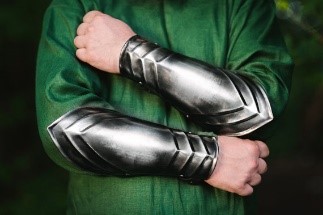
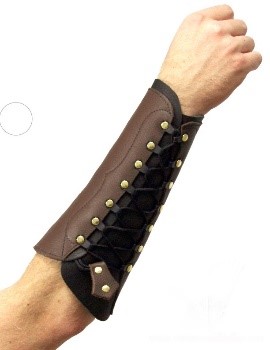
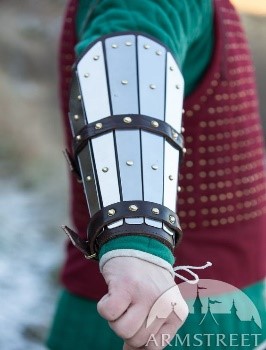
Bracers:
|
 |
 |
 |
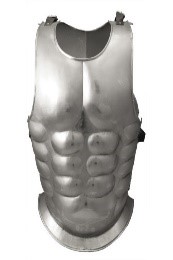
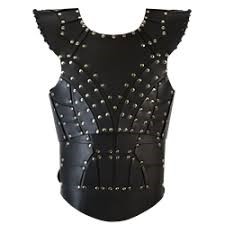
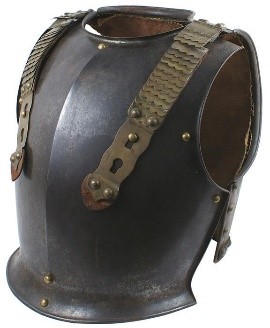
Cuirass/Vest:
|
 |
 |
 |
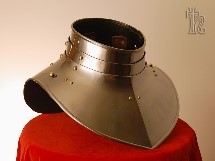
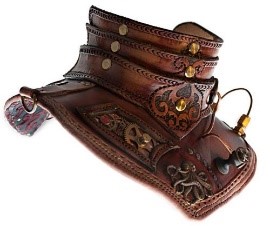
Gorget:
|
 |
 |
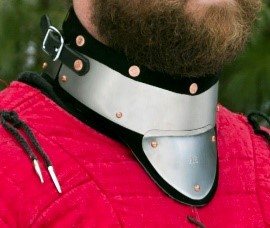 |
Gauntlets:
|
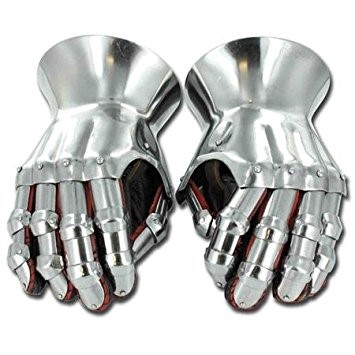 |
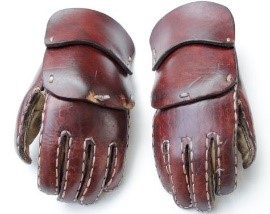 |
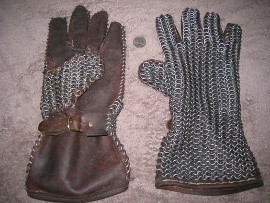 |
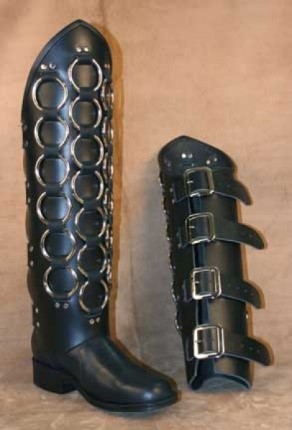
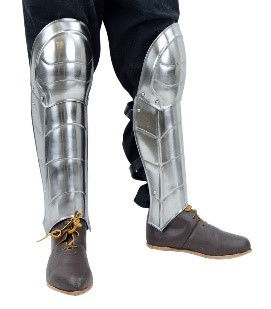
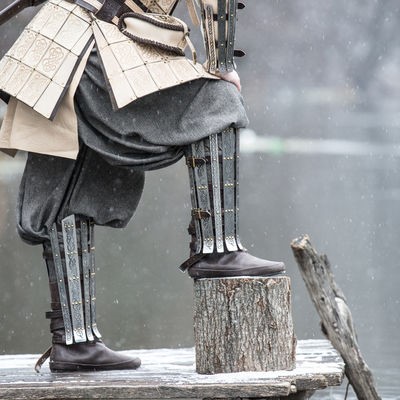
Greaves:
|
 |
 |
 |
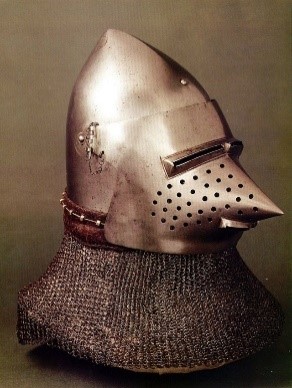
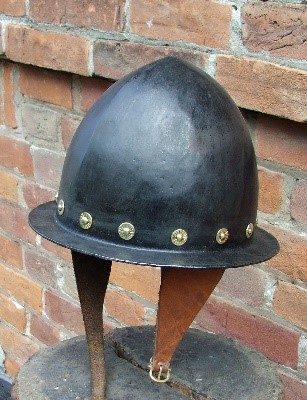
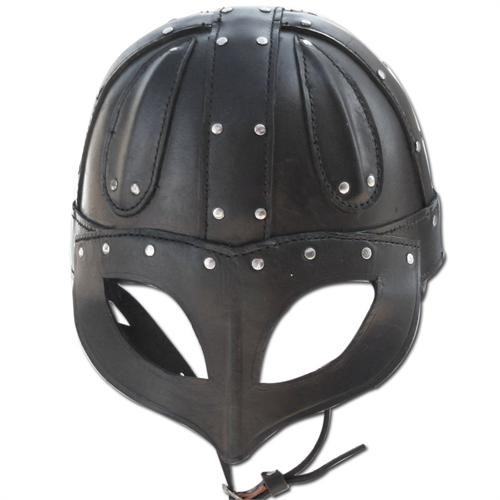
Helm/Helmet:
|
 |
 |
 |
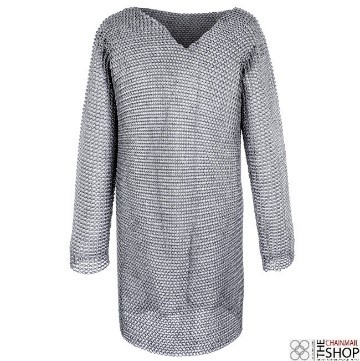
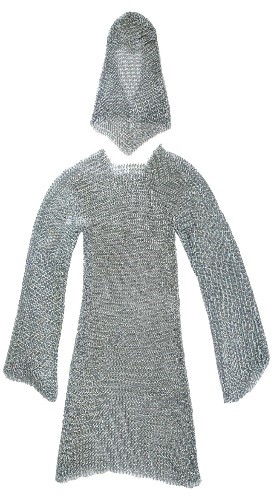
Haubergeon/long-sleeved shirt:
|
 |
 |
 |
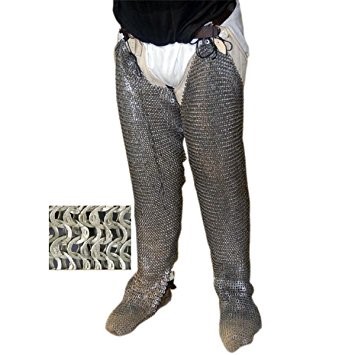
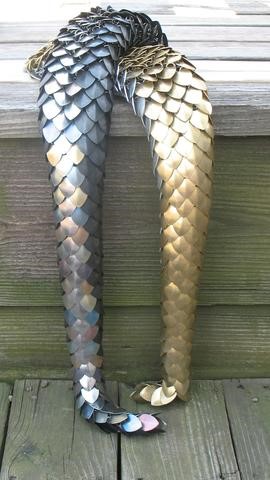
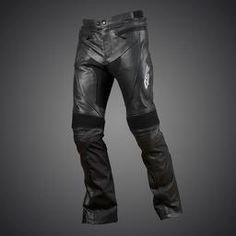
Leggings:
|
 |
 |
 |
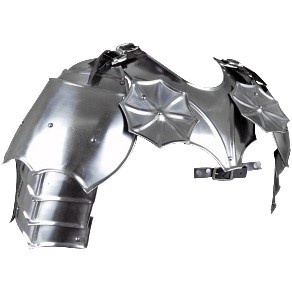
Pauldrons:
|
 |
 |
 |
Sabatons/boots:
|
 |
 |
 |
Shirt/short-sleeve:
|
 |
 |
 |
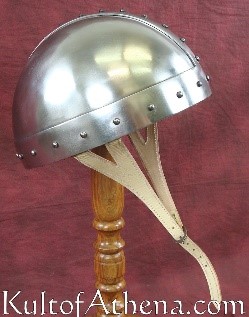
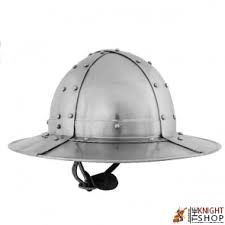
How to protect one’s head is perhaps the most important consideration that a combatant may have to make. Balancing protection and being able to see and hear has always been a tradeoff.
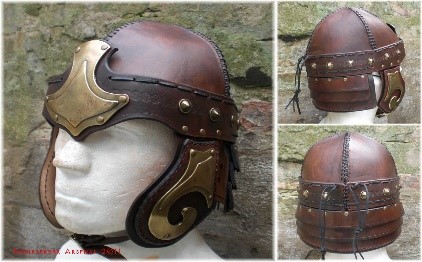
Table 3.1 below provides some examples of the types of helmets available details:
- Perception Penalty: This penalty is applied to a character who is attempting to make a perception check and reflects the difficulty to doing so that the helmet gives. Should a character wish to raise the visor of his helmet (assuming the helm has a visor), the perception penalty is halved.
- DB Bonus: This bonus is applied directly to a character’s defensive bonus. Also note that with some Rolemaster criticals the matter of whether a character is wearing a helm is the matter of life (often in a coma though) or instant death.
| Helmet Name & Description | Perception Penalty | DB Bonus | Examples: Different Types of Materials/Styles | |
|---|---|---|---|---|
Leather Pot Helmet:
|
-5 | +2 | 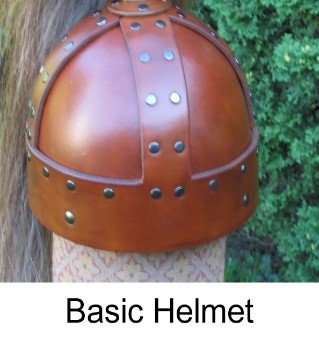 |
 |
Superior Leather (& Metal) Pot Helmet:
|
-5 | +3 | 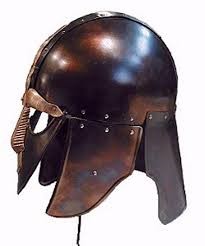 |
 |
Metal Pot Helm:
|
-5 | +4 | 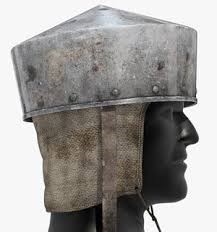 |
 |
Spangan:
|
-5 | +3 | 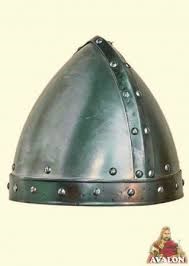 |
 |
Kettle Helm:
|
-6 | +4 | 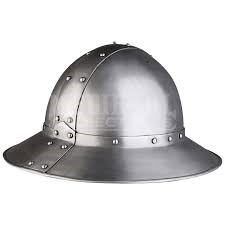 |
 |
Great Helm:
|
-15 | +6 | 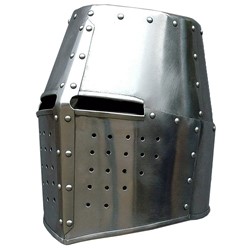 |
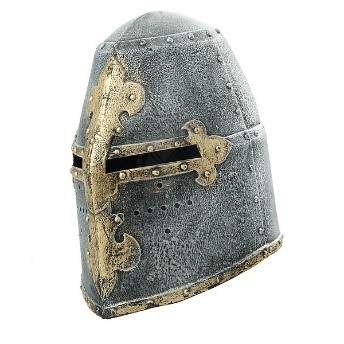 |
Aventail:
|
0 | +5 |  |
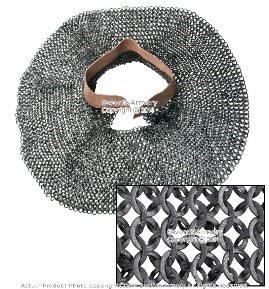 |
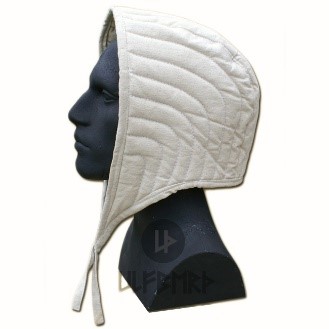
Arming Cap:
|
0 | +1 | 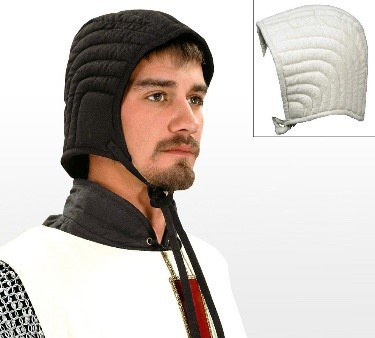 |
 |
Coif:
|
0 | +2 |  |
 |
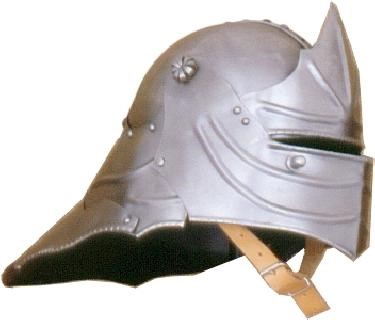
Sallet:
|
-10 | +3 | 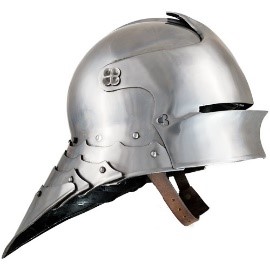 |
 |
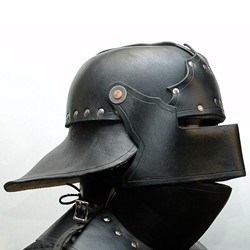
Sallet with Bevor:
|
-15 | +4 | 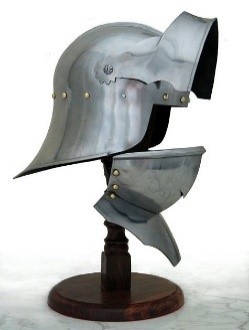 |
 |
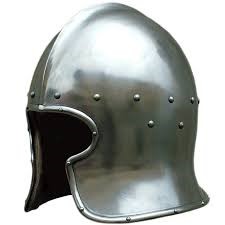
Barbute:
|
-10 | +4 | 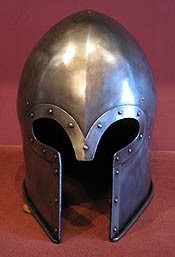 |
 |
Basinet:
|
-15 | +5 | 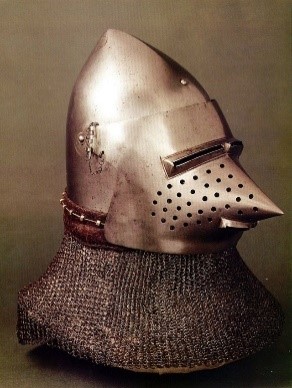 |
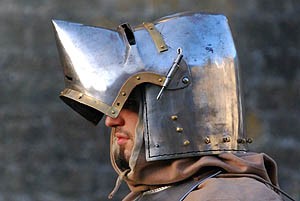 |
Armet:
|
-15 | +5 | 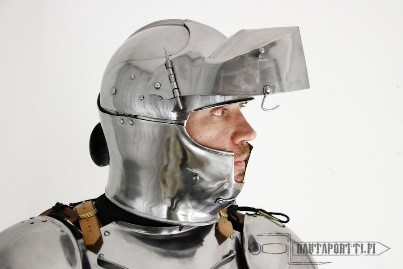 |
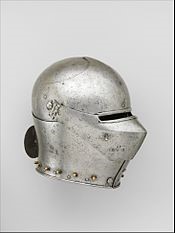 |
Lobster Tail:
|
-10 | +4 | 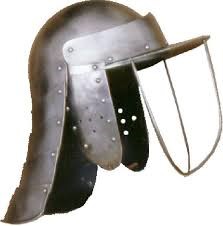 |
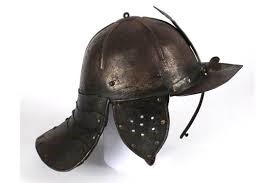 |
*Where a helmet has the option of a raisable visor and
the visor is raised the perception penalty is halved.
|
||||
| Helmet Type | Essence Modification | Channeling Modification | Mentalism Modification |
|---|---|---|---|
| Leather Helmet | -20 | 0 | -30 |
| Leather & Metal Helmet | -30 | -10 | -45 |
| Metal Pot/Small Helmet | -40 | -20 | -60 |
| Metal Full/Large Helmet | -50 | -30 | -80 |
Table 3.2 Spell Modifiers Due to Helmet Worn {rules="all" border="1" cellspacing="0" cellpadding="1"}
Table 4.0 Armor by Location explains exactly what part of the body the different armor components protect.
| Body Parts Protected | ||||||||||
|---|---|---|---|---|---|---|---|---|---|---|
| Armor | Head | Neck | Arms | Hands | Torso | Shoulders | Abdomen | Groin | Legs | Feet |
| Bracers | X | |||||||||
| Cuirass/Vest | X | X | X | |||||||
| Gorget | X | |||||||||
| Gauntlets | X | |||||||||
| Greaves | X | |||||||||
| Helm | X | |||||||||
| Haubergeon/long-sleeved shirt: | X | X | X | X | X | |||||
| Leggings | X | |||||||||
| Pauldrons | X | |||||||||
| Sabatons/boots | X | |||||||||
| Shirt/Short Sleeve | X | X | X | X | ||||||
Armor by the Piece
Sometimes armor does not come in nicely matched sets, purchased straight from the armorer. Warriors may be forced to make do with tattered, hand-me-down sets cobbled together from various pieces, or else taken from the dead and defeated on the field of battle.
Perhaps your character is a castaway forced to scavenge for what bits of armor she can find, or a resident of a post-apocalyptic setting in which everyone must scrounge through junk heaps and burned-out storefronts to acquire their equipment.
Though such patchwork suits are almost always less effective than complete suits with pieces made to work together, the rules in this section provide everything you need to know about mixing and matching Armor Types.
Any armor which is covered by the 1 – 20 core Armor Types listed above or are included in the helmet table are not include in Table 4.0 below. Rather these items of protective covering are to be added to the appropriate Armor Type.
Example: A Chainmail Shirt & Arm & Leg Greaves (AT14) already provides a good degree of protection but a character may well want to add rigid leather boots and a plate gorget for more protection.
Such a character would then have a core AT of 14 and an additional 5 to her defense bonus thanks to wearing the boots (+1.75DB) and the gorget (+3.5DB). Naturally though this character would also have the Maneuver Penalties for the boots and gogret added to her Maneuver Penalty for wearing AT14.
Armor by the Piece Table
Table 5.0 below provides all the basic additional types of armor previously discussed; i.e. generally not considered to be one of the AT1 – AT20 core Armor Types and/or items that could be added over the top of existing Armor Types.
- Defensive Bonus (DB): All items, except for the cuirass, give a
modifier to the character’s Defensive Bonus (DB). These are added
normally to the character’s DB and they apply against all attacks
against the character.
The DB for the individual items is given in fractions of whole numbers. You add all of these individual bonuses to DB together and then round off to the nearest whole number (less than 1.5 round down; 1.5 or higher rounds up). The DB for the full suits has already taken this rounding into account. - Maneuver Penalties: There are 2 columns that represent the maneuver penalties associated with the armor. Maneuver Penalties for armor are applied against all relevant mane skills equally, and against Base Movement Rate as detailed in Character Law, p.140.
- Armor Casting Modifiers: As with the core Armor Types, individual
- Weight: The weight of the armor. Full suits sometimes weigh slightly less than the individual pieces.
Note: To check both the cost per item and the production time it would take for an appropriate smith to craft this item of armor if she or he has all the materials ready and at hand please refer to Combat Companion p.34 – 35.
| Defensive Bonus | Max. Man. Penalty | Min. Man. Penalty | Missile Attack Penalty | Essence Penalty | Channeling Penalty | Mentalism Penalty | Wt. (lbs.) | |
|---|---|---|---|---|---|---|---|---|
| Heavy Cloth/Furs | ||||||||
| Helm/Hat | +1.25 | -2 | 0 | 0 | 0 | 0 | 0 | 1 |
| Long-sleeved shirt | +1.25 | -8 | 0 | 0 | 0 | 0 | 0 | 1 |
| Leggings | +1.25 | -6 | 0 | 0 | 0 | 0 | 0 | 1 |
| Gorget | +1.25 | -1 | 0 | 0 | 0 | 0 | 0 | 0.5 |
| Pauldrons | +1.25 | -1 | 0 | 0 | 0 | 0 | 0 | 1 |
| Gauntlets | +1.25 | -1 | 0 | -3 | 0 | 0 | 0 | 0.5 |
| Bracers | +1.25 | -2 | 0 | 0 | 0 | 0 | 0 | 0.5 |
| Greaves | +1.25 | -2 | 0 | 0 | 0 | 0 | 0 | 1 |
| Boots | +1.25 | -1 | 0 | 0 | 0 | 0 | 0 | 1 |
| Shirt | +1.25 | -6 | 0 | 0 | 0 | 0 | 0 | 3-4 |
| Soft Leather armor | ||||||||
| Leggings | +1.50 | -6 | 0 | 0 | -1 | 0 | 0 | 1 |
| Gorget | +1.50 | -2 | 0 | 0 | -1 | 0 | 0 | 0.5 |
| Pauldrons | +1.50 | -2 | 0 | 0 | -1 | 0 | 0 | 1 |
| Gauntlets | +1.50 | -2 | 0 | -5 | -1 | 0 | 0 | 0.5 |
| Bracers | +1.50 | -2 | 0 | 0 | -1 | 0 | 0 | 0.5 |
| Greaves | +1.50 | -2 | 0 | 0 | -1 | 0 | 0 | 2 |
| Boots | +1.50 | -2 | 0 | 0 | -1 | 0 | 0 | 1 |
| Rigid Leather armor | ||||||||
| Leggings | +1.75 | -16 | -2 | 0 | -2 | 0 | 0 | 1 |
| Gorget | +1.75 | -4 | -0.5 | 0 | 2 | 0 | 0 | 1 |
| Pauldrons | +1.75 | -4 | -0.5 | 0 | 2 | 0 | 0 | 2.5 |
| Gauntlets | +1.75 | -4 | -0.5 | -10 | 2 | 0 | 0 | 1 |
| Bracers | +1.75 | -4 | -0.5 | 0 | 2 | 0 | 0 | 1 |
| Greaves | +1.75 | -4 | -0.5 | 0 | 2 | 0 | 0 | 5 |
| Boots | +1.75 | -4 | -0.5 | 0 | 2 | 0 | 0 | 2 |
| Metal chainmail & Scale armor | ||||||||
| Gorget | +3 | -10 | -2 | 0 | -7 | -4 | 0 | 3-5 |
| Pauldrons | +3 | -10 | -2 | 0 | -7 | -4 | 0 | 4-5 |
| Gauntlets | +3 | -10 | -2 | -15 | -7 | -4 | 0 | 1 |
| Bracers | +3 | -10 | -2 | 0 | -7 | -4 | 0 | 4-5 |
| Greaves | +3 | -10 | -2 | 0 | -7 | -4 | 0 | 4-5 |
| Boots | +3 | -10 | -2 | 0 | -7 | -4 | 0 | 3 |
| Plate & Half Plate armor | ||||||||
| Gorget | +3.5 | -10 | -2 | 0 | -8 | -5 | 0 | 3-5 |
| Pauldrons | +3.5 | -10 | -2 | 0 | -8 | -5 | 0 | 4-5 |
| Gauntlets | +3.5 | -10 | -2 | -20 | -8 | -5 | 0 | 1 |
| Bracers | +3.5 | -10 | -2 | 0 | -8 | -5 | 0 | 4-5 |
| Greaves | +3.5 | -10 | -2 | 0 | -8 | -5 | 0 | 4-5 |
| Boots | +3.5 | -10 | -2 | 0 | -8 | -5 | 0 | 3 |
Wearing More Than One Type of Armor
Inevitably, a GM will need to handle situations in which a character desires to use two sets of armor over the same body area, for example a chainmail shirt (AT13), worn underneath a rigid leather breastplate (AT9).
Core armor type combinations
To calculate combined Armor Types (AT) assume the greater AT to be the base/core AT and give a DB Bonus equal to twice the lesser AT minus two.
DB Bonus for Lesser Armor = Lesser AT x 2 – 2
Example: G’narrash is a rather nasty mountain troll with a natural AT of 11. In addition, G’narrash is wearing a Troll-sized chain Hauberk (AT16). Attacks on G’narrash use the AT16 column with an additional DB bonus of; 20 = 11 x 2 – 2.
When combing armor that is not natural, all armor penalties apply (i.e. maneuver penalties, Qu penalties, missile penalties, etc.). In addition, if more than one suit of armor is used, the additional suits also have 50% of their weight count as encumbrance.
Ultimately pure practicalities and what is ultimately reasonable and feasible come into play. Perhaps wearing a chainmail shirt underneath a metal breastplate is feasible (indeed it often was worn historically) but adding, for example, coat of brigandine over the top of the breastplate, unless the breastplate was fitted extremely well, would likely significantly impair the character concerned movement, ability to fight run, or fire a bow.
Common sense combined with a discussion with the GM should resolve most situations in terms of what is reasonable.
Armor by the piece combinations
As mentioned previously, if you wear multiple items in the same location, such as two sets of bracers, you get both DB bonuses, but you also get the penalties associated with both items as well.
Perhaps wearing a lighter leather set of bracers underneath metal braces is feasible but adding a third pair again would likely significantly impair the character concerned movement, ability to fight or fire a bow.