The Art of Fighting Section 8: Armor
Copyright Johs. Sondrup © 2011
Edited by Peter Mork for The Guild Companion
"What provided Japanese armor the appearance of wood was the lacquer covering the leather and metal."
Editor's Note: The following is the eighth in a series of 13 articles that enhance the combat rules for Rolemaster (RM2). It is our intention to publish another article in this series every month for the next year. This month's article describes armor from Europe and Asia. Next month's article will discuss vis, a pervasive life energy.
Armor
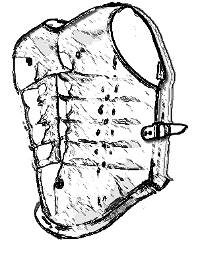
There are a couple of things that are less than perfect with the Armor Types in Rolemaster. The first problem is how the lower armor types are defined. In many cases reinforced leather armor is worse than wearing no armor at all; at least until the top twenty results on the attack tables. This doesn't fit with historical references or common sense, but it can be fixed without changing the attack tables, by redefining the Armor Types. Another problem is the complete lack of scale, lamellar and banded or laminated armor. So those types of armor have been added to the existing armor types.
Please note that if you use this section, it's a bad idea to use the Enhanced Armor section from Arms Companion because the bonuses will conflict.
Armor material and design
While Rolemaster attack tables only covers Leather, Chain and Plate armor, there are several other types of armor that have been used all over the world. As with most other armors they are defined by both the materials used and design, which is the way these materials are put together.
Textile Armor
Quilt armor consists of two layers of cloth with cotton or some other
soft material between them, while padded armor consist of a heavy layer
of felt. Both types were normally used under most metal armors to lessen
the force of blows and to prevent chafing, but they can be used on their
own. Recent studies have shown that they protect surprisingly well, but
they are easily destroyed particularly by cutting and slashing weapons.
Quilt and padded armor only lasts one combat against cutting or slashing
weapons, making them fairly inconvenient for most adventures, unless the
PCs have the skills or spells to repair them. They do, however, not
affect spell casting, making them a good choice for Essence or Arcane
users.
The Greek Hoplites and the early Romans used a linen cuirass (torso protection) known as a linothorax or 'stiff shirt' that consisted of many layers of linen glued together. It was very lightweight compared to the bronze breastplate that was the alternative, and it was also a lot cheaper and gave good protection against the bronze or iron weapons used at that time. However as steel weapons that could cut through the linen cuirass became more widespread, the linen cuirasses were replaced with more efficient armor. The Aztecs used a quilted cotton vest called an ichcahuipilli, which was worn under a suit of animal skin.
The development point cost for cloth armor is half of that of soft leather. It is assumed that people that wear metal armors have a quilt or padded armor under it, so there is no need to add this to maneuver penalties. Please note that unlike AT 3&4 in Arms & Claw Law, these armor types have Maneuver Penalties and thus need the Maneuvering in Armor skill if they are to be used without penalties. Due to its construction textile armor is -10 versus non-crushing weapons.
Metal Scale or Jazeraint Armor
Scale armor or jazeraint is the oldest known type of metal body armor.
It is normally made of small, thin plates of iron, bronze, or brass
laced, sewn, or riveted onto a cloth or (more rarely) a leather backing.
Scales are staggered from one row to the next to increase the strength
of the armor. Scale armor offers better protection from blunt attacks
than chain. It is also cheaper to produce, but it isn't as flexible and
doesn't offer the same amount of coverage. Forms other than brigandine
and coat of plates were uncommon in medieval Europe, but scale and
lamellar remained popular elsewhere, especially in the east. The Roman
Army also made use of scale armor, called lorica squamata. It is
typically seen on depictions of standard bearers, musicians, centurions,
cavalry troops, and even auxiliary infantry, but could be worn by
regular legionaries as well. A shirt of scale armor was shaped in the
same way as a chain armor shirt or lorica hamata (Roman chain armor),
mid-thigh length with the shoulder doublings, equal to AT 13 in
Rolemaster.
The Chinese developed the normal scales into what is known as the Shan Wen Kai or "Mountain Pattern Armor". It began to appear during the Tang Dynasty (618-907 AD) and was further perfected during the Ming dynasty. It is made from a multitude of small pieces of steel that are vaguely shaped like the Chinese character for the word shan (Mountain). The pieces are then interlocked and riveted to a cloth or leather backing. It effectively covers the torso, the shoulders and the thighs while remaining comfortable and flexible enough to allow movement.
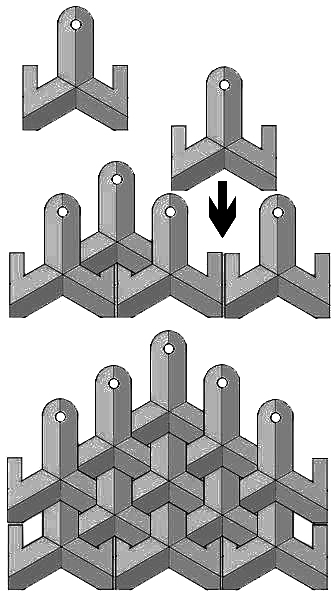
Normal Scale Armor protects as chain +5. Add 10 to the Maximum Maneuver Penalty for AT 14 and 15. For AT 16, which is a full length coat with leggings under it, add 10 to the Maximum Maneuver Penalty and 5 to the Minimum Penalty.
Mountain Pattern Scale Armor protects as chain +10. Add 10 to the Maximum Maneuver Penalty for AT 14 and 15. For AT 16, which is a full length coat with leggings under it, add 10 to the Maximum Maneuver Penalty and 5 to the Minimum Penalty.
Lamellar Armor
Lamellar consists of small rectangular plates called lames or lamellae,
attached to each other with lacing. More advanced than scale armor,
lamellar is heavier, overlaps more efficiently, is less vulnerable to
thrusts, and is not necessarily attached to any backing material. It is
superior to scale in every way, superior to chain armor against
bludgeoning weapons and thrusts, but heavier and more susceptible to
battle damage from cuts. The lames are made from pieces of lacquered
leather, iron, steel or horn held together with silk, leather thongs, or
cotton thread. When the lames are made of leather they would often be
hardened by a process such as cuir bouilli (boiled in oil to make the
leather hard) or lacquering. The lamellar cuirass was especially popular
with the Rus, the Scandinavian settlers of Russia, as well as Mongols,
Turks, Avars, and other steppe peoples as it was simple to create and
maintain. A great part of the Samurai armor as well as other Japanese
armor are also lamellar armors.
Rigid Leather or Horn Lamellar Armor is equal to AT 9, 10 or 11 depending on the covering. A breast plate is AT 9; a breast plate with upper arm and lower leg covering is AT 10, and a full suit that covers the whole body is AT 11. Reaching AT 12 with leather or horn lamellar requires extraordinary materials like dragon scales, sea-turtle shell or other similar materials.
Metal Lamellar Armor is equal to AT 17, 18, 19 or 20 depending on the covering. A metal lamellar shirt is AT 17 (-10), a metal lamellar shirt with greaves on arms and legs is AT 18 (-10), and metal lamellar armor covering the body completely in the form of a sleeved shirt and leggings is AT 19 (-10). Metal lamellar armor covering the body completely in the form of coat split from the waist in the front and back (for cavalry) or in the sides (for infantry) to facilitate movement and with leggings worn underneath is AT 20 (-10). The -10 penalty arises from the fact that lamellar armor protects somewhat less than 'real' plate armor.
Splinted Armor
Somewhat similar to lamellar armor, splinted armor consists of long
narrow strips (or splints) riveted onto to a leather backing. While it
gives protection and is fairly light and quiet, it's also very
inflexible and splinted armor was used almost exclusively for greaves
and leggings to be worn with other armors, usually lamellar armor,
especially since splinted armor is even easier to make and maintain than
lamellar armor. In the few cases where splinted armor is used for a
whole suit, it counts as scale armor.
Banded or Laminated Armor
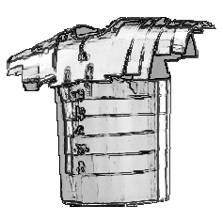
Banded or laminated armor consists of metal strip or bands that are
overlapping and fastened on the inside with leather strips. While this
may sound a lot like lamellar armor there is a huge difference: banded
armor is always made of articulated metal strips. The most famous
lamellar armor in the world is the Roman lorica segmentata, which is
known from countless movies, comic books and historical references. The
strips on the lorica segmentata were arranged horizontally on the body,
overlapping downwards, and they surrounded the torso in two halves,
being fastened at the front and back. The upper body and shoulders were
protected by shoulder guards and breast- and back-plates. The
effectiveness of banded armor is very close to that of lamellar armor.
Banded armor protects as AT 17, 18 or 19 depending on the covering. A breastplate is AT 17 (-5), and a breast plate with greaves on arms and legs is AT 18 (-5). Banded Armor covering the body completely in the form of a sleeved shirt and leggings is AT 19 (-5). The -5 penalty arises from the fact that banded armor protects somewhat less than 'real' plate armor. The articulated bands of metal do not allow for better coverage than this (i.e., AT 20 is not possible.
Brigandine (Coat of Plates)
The brigandine or brigantine is a vest made of cloth or supple leather,
with steel plates riveted to the inside. Normally another layer of cloth
or leather is added underneath, to protect the wearer from the plates.
Because of the way it is made, brigandine was much cheaper than plate
armor, simple enough in design for a soldier to make and repair his own
armor without needing the high skill of an armorer. It is also easily
concealed under normal clothes. Brigandine is fairly flexible, easy to
wear and is very good at absorbing blunt impact, but because of its
construction it is easily destroyed particularly by cutting and slashing
weapons. Another weakness of brigandine armor is that it doesn't cover
the sides or the upper thighs, leaving those areas unprotected from
attack.
Brigandine protects as AT 17 (-15) and can be combined with plate arm and leg protection, which is equal to a AT 18 (-15).
Plate Armor
The oldest piece of plate armor is the breastplate, which has been used
by various cultures throughout history. The ancient Greek and Roman
armies both used breastplates with or without shoulder- and
leg-protection (Armor Type 17 and 18), but in medieval times (around the
13th century) they placed the steel breastplate over chain armor. As
development moved on, more pieces of plate were added (See chain armor
add-ons). During the next hundred years, the arms and legs were
gradually incased in metal plates until almost the whole body was
covered with plate secured over chain armor (Armor Type 19). However, in
the 14th century, suits made entirely out of plates started to emerge
(Armor Type 20) and during the 15th century these suits became better
and better until the best of them were masterpieces of workmanship. What
made these armors obsolete was the introduction of firearms into
warfare. Though firearms were used in Europe during the 14th and 15th
century they were unreliable and misfired frequently. With the invention
of reliable guns, such as the matchlock gun around 1500 and later the
flintlock gun, common soldiers had a weapon that could defeat a knight
in full plate armor. It might have been the end of suits of armor, but
it wasn't the end of plate armor. Soldiers, and especially officers,
wore breastplates for several hundred years after that.
As with European swords there are many misunderstanding about full plate armor (Armor Type 20 in Rolemaster). In most movies knights in full plate armor are slow and clumsy and need help to get onto their horses or on their feet if they fall. That is not the truth. A suit of plate armor had an average weight of 55 to 66 pounds and, while that sounds like a lot, it is less than the weight of modern combat gear of an infantry soldier, and the weight is better distributed. The weight was so well spread over the body that a fit man could run, or jump into his saddle. This doesn't mean that suits of armor were comfortable to wear, but that the main cause of discomfort did not come from the weight of the armor, rather from the fact that the armor restricted breathing and the ability to ventilate body heat. Adding a helmet that limits vision and hearing doesn't help with the comfort either. What it does mean is that a warrior in full plate armor is a formidable and surprisingly maneuverable opponent that only a fool would underestimate. Also note that there are many different kind of plate armor, but for the sake of simplicity, this system only uses three: cavalry armor, infantry armor and jousting armor. However, since jousting armor was not meant for real combat, there are really only two choices. Using cavalry armor as infantry or vice versa will add 10 to the Minimum Maneuver Penalty.
Redefining the Armor Types
With the addition of new armor types it has been necessary to rearrange the armor types given in Arms and Claw Law a bit.
Cloth-Skin Base
Normal or no clothes and textile based armors such as quilted or padded armor. Arms Law defines AT 3 and 4 as natural hides of animals and if it is used as such, it has no penalties. It is, however, also the Armor Type for quilt or padded armor.
Skin or light Clothing (AT 1):
In Arms Law, AT 1 is called skin and that is exactly right: If the
character is not wearing any clothes at all, only undergarments or very
light clothing, then it's AT 1. Everyday light clothing of tropical or
semi tropical areas, like breechclout, loincloth, the loose baggy short
pants often worn by sailors, and the Scottish kilt are all examples of
light clothing.
Normal Clothes (AT 2:)
AT 2 includes all kinds of normal clothes for a temperate climate, which
can be just about anything from shirt and pants to the traditional robes
of spell-casters or priests.
Textile Armor Coat (AT 3):
A quilt or padded armor vest covering the torso to the waist. Textile
Armor is -10 versus non-crushing weapons.
Textile Armor Coat with Leggings (AT 4):
A quilt or padded armor vest covering the torso to the waist and
leggings made of the same material. Textile Armor is -10 versus
non-crushing weapons.
Soft Leather armor types (AT 5-8)
Looking at the definitions for armor in Arms and Claw Law, it is stated that soft leather (AT 5 to 8) is defined as "heavy outer garments normally worn as weather protection by certain civilians and as combat protection by some militia and irregulars." With the addition of new armors, this is now changed and heavy outer garments worn for weather protection are now AT 3 or 4.
Leather Jerkin (AT 5):
A leather vest covering the torso to the waist.
Leather Coat (AT 6):
A leather coat covering the arms and torso to mid-thigh.
Leather Coat with leggings (AT 7):
A leather coat covering the arms and torso to mid-thigh and with leather
covering the legs.
Heavy Leather Coat with leggings (AT 8):
As above but with multiple layers of leather or with padding/isolating
material under it.
Rigid Leather armor types (AT 9-12)
Rigid leather armor, reinforced leather armor and the rigid hide covering of creatures like certain reptiles and fantastic creatures like Dragons. This includes Leather Scale and Lamellar armors made from Rigid Leather (or Horn) as well as Soft Leather armors reinforced with metal strips or rings. Historically, rigid leather armors were often decorated.
Leather breast plate (AT 9):
1. Rigid leather or a reinforced soft leather breastplate covering the
torso to mid-thigh and part of the upper arms.
2. Scale armor breastplate made from rigid leather or horn.
3. Lamellar armor breastplate made from rigid leather or horn.
Leather breast plate and Greaves (AT 10):
1. Rigid leather breastplate covering the torso to mid-thigh and part of
the upper arms or reinforced soft leather breastplate, both with greaves
on the forearms and lower legs (reinforced in case of a soft leather
base).
2. Scale armor breastplate made from rigid leather or horn, with greaves
on the forearms and lower legs.
3. Lamellar armor breastplate made from rigid leather or horn, with
greaves on the forearms and lower legs.
Leather breast plate and Leggings (AT 10a):
Rigid leather breastplate covering the torso to mid-thigh with Greaves
on the legs This is an 'archer version' of leather armor that leaves the
arms free to ease the use of missile or thrown weapons.
Leather breast plate with Greaves and Leggings or Half-Hide Plate
(AT 11):
1. Rigid-leather or reinforced soft leather armor covering the body
completely and the hide of creatures that contain at least some rigid
plates such as rhinoceroses and alligators.
2. Scale armor made from rigid leather or horn, covering the body
completely in the form of a sleeved shirt and leggings.
3. Lamellar armor made from rigid leather or horn, covering the body
completely in the form of a sleeved shirt and leggings.
Leather Plate armor or Full-Hide Plate (AT 12):
As above, except that the plates are harder and/or more plentiful. It is
also the hide of well protected creatures like turtles, dinosaurs and
certain dragons or scale or lamellar armor made of these materials.
Chain or Metal Scale armor (AT 13-16).
Chain armor, metal scale armor and the hides of certain fantastic creatures like dragons.
Chain or Metal Scale armor Shirt (AT 13):
1. Chain armor shirt covering the torso to mid-thigh and part of the
upper arms.
2. Metal scale armor shirt covering the torso to mid-thigh and part of
the upper arms.
Chain or Metal Scale armor Shirt and Greaves (AT 14):
1. Chain armor shirt covering the torso to mid-thigh and part of the
upper arms with greaves on the forearms and lower legs.
2. Metal scale armor shirt covering the torso to mid-thigh and part of
the upper arms with greaves on the forearms and lower legs.
Chain or Metal Scale armor Shirt and Leggings (AT 14a):
Chain or metal scale armor shirt covering the torso to mid-thigh and
part of the upper arms and leggings that cover the legs completely. This
is an 'Archer version' of the chain or scale armor that leaves the arms
free to ease the use of missile or thrown weapons.
Full Chain or Metal Scale armor (AT 15):
1. Chain armor covering the body completely in the form of a sleeved
shirt and leggings.
2. Metal scale armor covering the body completely in the form of a
sleeved shirt and leggings.
Chain or Metal Scale Hauberk (AT 16):
1. A full-length chain coat split from the waist in the front and back
(for cavalry) or in the sides (for infantry) to facilitate movement.
Leggings were worn underneath.
2. A full-length metal scale coat split from the waist in the front and
back (for cavalry) or in the sides (for infantry) to facilitate
movement. Leggings were worn underneath.
3. The natural armor of some dragons, trolls and other fantastic
creatures.
Plate armor (AT 17-20)
Plate armor, brigandine, metal lamellar or banded armor as well as the hides of some dragons and other fantastic creatures.
Metal Breastplate (AT 17):
1. A metal breastplate with extra plates covering part of the upper
arms, the hips and reaching to mid-thigh.
2. Brigandine armor covering the torso to mid-thigh and part of the
upper arms is AT 17 (-15)
3. Metal lamellar covering the torso to mid-thigh and part of the upper
arms is AT 17 (-10).
4. Banded armor covering the torso to mid-thigh and part of the upper
arms is AT 17 (-5).
Metal Breastplate and Greaves (AT 18):
1. A metal breastplate with extra plates covering part of the upper
arms, the hips and reaching to mid-thigh with greaves on the forearms
and lower legs.
2. Brigandine armor covering the torso to mid-thigh and part of the
upper arms and with greaves on the forearms and lower legs is AT 18
(-15).
3. Metal lamellar covering the torso to mid-thigh and part of the upper
arms and with greaves on the forearms and lower legs is AT 18 (-10).
4. Banded armor covering the torso to mid-thigh and part of the upper
arms and with greaves on the forearms and lower legs is AT 18 (-5).
Metal Breastplate and Leggings (AT 18a):
Another 'archer version', this armor is the same at AT18 except that the
leggings cover the legs completely and some of the armor on the upper
arms and shoulders have been removed, so that the arms are free to ease
the use of missile or thrown weapons.
Half Plate (AT 19):
1. Plate armor covering the body, but with chain armor between the
plates and at the joints.
2. Metal lamellar armor covering the body completely in the form of a
sleeved shirt and leggings or a Lamellar coat split from the waist in
the front and back (for cavalry) or in the sides (for infantry) to
facilitate movement is AT 19 (-10).
3. Banded armor covering the body completely in the form of a sleeved
shirt and leggings is AT 19 (-5).
Full Plate (AT 20):
1. Plate armor covering the body completely and with plates overlapping
at the joints.
2. Metal lamellar armor covering the body completely in the form of coat
split from the waist in the front and back (for cavalry) or in the sides
(for infantry) to facilitate movement and with lamellar leggings and
splinted arm greaves worn underneath is AT 20 (-10).
New Armor Table
This revised version of the armor table includes several 'new' armor types, due to the fact that not all armors followed the traditional Rolemaster armor progression wherein torso protection was added first, then arm protection was added and finally the legs were armored. Throughout history there have been fighter types that used missile weapons as their primary weapon, but still could go into melee (called heavy archer or heavy crossbow units) and they used armors that did not limit their attack with missile weapons. Armor Types 10a, 14a and 18a are such 'archer armors'.
Full plate armor evolved from an effective, but cumbersome, armor to a maneuverable and equally effective armor during the time it was used. AT20a is an example of the more advanced version of these full plates. Be aware that advanced full plate is made on demand and typically takes about 180 days (6 months) to make. Typically only nobles had such armors because they were very expensive (600 silver) and because the few armor smiths that could make such armors usually did not work for anybody other than the nobility
| Armor Type | Minimum Maneuver Penalty | Maximum Maneuver Penalty | Missile Attack Penalty | Quickness Penalty | Notes |
|---|---|---|---|---|---|
| 1 | 0 | 0 | 0 | 0 | Sking or Light Clothing |
| 2 | 0 | 0 | 0 | 0 | Normal Clothing |
| 3 | 0 | -5 | 0 | 0 | Quilt or Padded Armor |
| 4 | 0 | -10 | 0 | 5 | Heavy Quilt or Padded Armor |
| 5 | 0 | -5 | 0 | 0 | Leather Jerkin |
| 6 | 0 | -15 | 5 | 0 | Leather coat |
| 7 | -10 | -30 | 15 | 10 | Leather coat with leggings |
| 8 | -15 | -45 | 15 | 15 | Heavy leather coat with leggings |
| 9 | -5 | -50 | 0 | 0 | Leather Breastplate |
| 10 | -10 | -70 | 10 | 5 | Leather Breastplate and Greaves |
| 10a | -15 | -80 | 0 | 10 | Leather Breastplate and Leggings |
| 11 | -15 | -90 | 20 | 15 | Leather Breastplate with Greaves and Leggings or Half-Hide Plate |
| 12 | -15 | -110 | 30 | 20 | Leather Plate armor or Full-Hide Plate |
| 13 | -10 | -70 | 0 | 5 | Chain Shirt |
| 14 | -15 | -90 | 10 | 10 | Chain Shirt and Greaves |
| 14a | -20 | -100 | 0 | 15 | Chain Shirt and Leggings |
| 15 | -20 | -110 | 15 | 15 | Full Chain |
| 16 | -25 | -130 | 15 | 20 | Chain Hauberk |
| 17 | -15 | -90 | 0 | 10 | Metal Breastplate |
| 18 | -20 | -115 | 10 | 20 | Metal Breastplate and Greaves |
| 18a | -25 | -130 | 0 | 25 | Metal Breastplate and Leggings |
| 19 | -35 | -150 | 30 | 30 | Half Plate, Lamellar or Banded Armor |
| 20 | -45 | -165 | 40 | 40 | Full Plate or Lamellar suit. |
| 20a | -25 | -130 | 40 | 20 | Advanced Full Plate |
New Armor Table {rules="all" border="1" cellspacing="0" cellpadding="1"}
Chinese Armor.
Background.
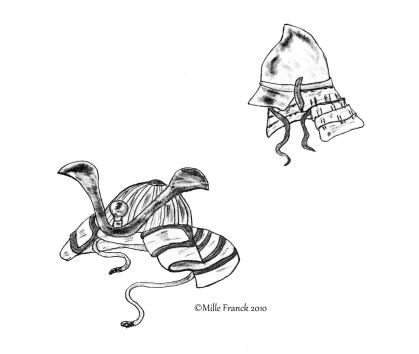
The main difference between Chinese and western armor is that plate armor was largely unused; instead they used lamellar, scale and brigandine armor. Perhaps the most important reason for this is the power of missile weapon in the east. The Chinese invented the crossbow in the 4th century BC and with that came the ability to punch through a heavily armored opponent before they could enter melee range. They also had the recurve bow and mounted archers, which combined into a highly maneuverable force with the ability to take out opponents with missile fire without even entering close combat. The recurve bow or Mongol bow is not as large as the English bow, but it is vastly more powerful. The draw weight of an English longbow averages around 70-80 pounds, whereas the recurve bow had a pull that averaged at around 160 pounds. This affected the shooting range considerably. The English longbow could shoot at distances up to 250 yards, but the Mongol counterpart can hit its target at 350 yards. (The weapon stats for Rolemaster do reflect this, though the ranges given are for firing at a single target and not volley fire.)
With these formidable missile weapons in use, military tactics centered on mobility and firepower exactly as it did in Europe after the invention of reliable firearms. This means that heavy armor was rarely used since it tend to slow people down. One might speculate why the Chinese didn't develop plate armor later, since they could have gotten the idea from trading with the west, but the Chinese used guns in warfare as early as 1355 and the Indians might have used it even earlier (according to some sources), so by the time plate armor was perfected in Europe around 1500, it was already obsolete in the east.
Materials we have today on ancient Chinese armor indicate that armor of the same type is similar in style, measurement, construction and number of chips. This is most likely the result of measurement unification promoted by Emperor Qin Shihuang during the Qin Dynasty (221-207 BC) and continued by almost every dynasty for the next 2000 years, and shows that the production of armor was centralized instead of privately done. This is especially important because the armies of ancient China were huge and thus required lots of resources to equip and maintain. The Sui and Tang Dynasties had a professional army of some 600,000 men and in the later Song Dynasty this had risen to 1.25 million men. All of which had to be equipped and maintained and both scale and lamellar armors are cheaper to produce and maintain than plate armors.
Armors in different dynasties
The Warring States 403-221 BC
The most used armor in the Warring States Period was rigid leather armor
of lamellar or scale construction. As a general rule these leather suits
covered only the torso part of the upper arms, but full suits could also
have been constructed (AT 9, 10 and 11). Later in this period iron armor
started to show up, using the same construction as with leather, but the
design is inferior to later armors.
The Qin Dynasty 221-207 BC
The Qin Dynasty and the later Han Dynasty was a transition period for
armor materials. The most common armor style was iron scale armor (AT 13
(+10) or rigid leather (AT 9)) that reached to mid thighs. The length of
the armor is equal in front and back, rounded at the lower edges with no
additional decoration.
Han Dynasty 206 BC-220 AD
By the Han Dynasty, rigid leather armor began to be replaced by armor
made of iron. The most common armor style was iron scale armor (AT 13
(+10)) or lamellar armor (AT 17 (-10)) that reached to mid thighs.
Wei, Jin, Southern and Northern Dynasties 220-589 AD
More wars led to greater development in armor. Typical armor of this
period included the barrel sleeve suit, the double layer suit and the
Mingguang suit, though scale and lamellar armor were still in use. The
barrel sleeve suit is normally made of iron scales. Protective barrel
sleeves are attached at the shoulders. A helmet is worn with ear
protectors and decorative tassels. The double-layered suit is mostly
made with metal although those made from animal skins have also been
found. The suit is in two pieces on front and back, covering the chest
and the back respectively, similar to a vest that runs down to below the
belly. Mingguang suit is one with round metal plates protecting the
chest and the back, worn with a leather belt and wide trousers. This
type of armor became more popular over the ages and gradually replaced
the double layer suit. Horse armors were also developed in this period
and continued to evolve.
Sui Dynasty 589-617 AD
The most commonly used armor in the Sui Dynasty was the double-layered
suit and the Mingguang suit. The double-layered suit improved with
smaller fish-scale chips, and extended to the belly so that a leather
armor skirt was no longer necessary. The bottom of the suit was made of
crescent or lotus-leave shaped chips for better protection below the
waist. The form of the Mingguang armor was similar to the previous
dynasties, only with longer trouser legs. A series of reforms were done
on garment styles, including reforms of army suits. Iron and leather
suits were used in actual wars, whereas decorative armor suits made with
silk and cotton, visually pleasing as they were, were used as daily wear
or ceremonial suit for generals.
Tang Dynasty 618-907 AD
The armor designs stayed more or less the same, but more decorations
were found in the Tang helmet, suit and boots. The chips were better
formed for ease of movement and this development resulted in the
invention of the Shan Wen Kai or "Mountain Pattern Armor". (See the
Scale Armor Section for more information about this armor.) At the prime
of the Tang Dynasty, the strong national power led to a more peaceful
time. The once practical armor suits became more decorative than
functional. The suits were painted, and even the inner garments were
embroidered with animals.
Song Dynasty 960-1279 AD
In ancient China, greater protection was often achieved by increasing
the number of chips. Chips became heavier and heavier through the ages.
There were two kinds of armor suits in the Song Dynasty, one for use in
an actual fight and the other for ceremonial purposes. According to Song
history, the entire suit had 1825 pieces of chips that were connected
with leather threads. The total weight was approximately 55 pounds. As
for ceremonial armor suits, the face was made with yellow silk while the
lining was made with cotton cloth. Chips were painted on with a
yellowish green color, complete with edging decoration of red brocade,
black trousers, red leather ribbons and painted faces on front and back.
Brigandine armor was also used.
Yuan Dynasty 1279-1368 AD
The armor of the Chinese stayed more or less the same, but there were a
lot of Mongol armors. Chain armors were also used, introduced by the
Mongols.
Note that unlike most other areas in the world the different kinds of armor never really went out of style. It is entirely possible to get rigid leather scale in the Sui Dynasty, for example. The time period simply refers to the time when these armors were invented or were used frequently.
| Time Period | Armor | AT | DB Mod | Min Maneuver Penalty | Max Maneuver Penalty | Missile Attack Penalty | Quickness Penalty |
|---|---|---|---|---|---|---|---|
| 403-221 BC The Warring States | Rigid Leather Scale | 9 | 0 | -5 | -50 | 0 | 0 |
| Rigid Leather Scale with arm and leg protection | 10 | 0 | -10 | -70 | 10 | 5 | |
| Rigid Leather Lamellar | 9 | +5 | -5 | -50 | 0 | 0 | |
| Rigid Leather Lamellar with arm and leg protection | 10 | +5 | -10 | -70 | 10 | 5 | |
| 221-207 BC The Qin Dynasty | Scale Armor | 13 | +5 | -10 | -70 | 0 | 5 |
| Scale Armor with arm and leg protection | 14 | +5 | -15 | -100 | 10 | 10 | |
| Scale Armor Suit | 15 | +5 | -25 | -130 | 20 | 20 | |
| 206 BC-220 AD Han Dynasty | Lamellar Armor | 17 | -10 | -15 | -90 | 0 | 10 |
| Lamellar with arm and leg protection | 18 | -10 | -20 | -110 | 10 | 20 | |
| Lamellar Armor Suit | 18 | 0 | -20 | -130 | 10 | 20 | |
| 220-589 AD Wei, Jin, Southern and Northern Dynasties | Barrel sleeve suit | 15 | 0 | -25 | -130 | 20 | 20 |
| Double layer suit | 13 | +5 | -10 | -70 | 0 | 5 | |
| Mingguang Suit | 17 | -5 | -15 | -90 | 0 | 10 | |
| 589-617 AD Sui Dynasty | Double layer suit | 13 | +5 | -10 | -70 | 0 | 5 |
| Mingguang Suit | 17 | -5 | -15 | -90 | 0 | 10 | |
| 618-907 AD Tang Dynasty | Brigandine Armor | 17 | -10 | -15 | -90 | 0 | 10 |
| Mountain Pattern Armor | 13 | +10 | -10 | -70 | 0 | 5 | |
| Mountain Pattern Armor | 14 | +10 | -15 | -100 | 10 | 10 | |
| Mountain Pattern Armor | 15 | +10 | -25 | -130 | 20 | 20 | |
| 960-1279 AD Song Dynasty | Lamellar Armor | 17 | -10 | -15 | -90 | 0 | 10 |
| Lamellar with arm and leg protection | 18 | -10 | -20 | -110 | 10 | 20 | |
| Lamellar Armor Suit | 18 | 0 | -20 | -130 | 10 | 20 | |
| Brigandine Armor | 17 | -10 | -15 | -90 | 0 | 10 | |
| Mountain Pattern Armor | 13 | +10 | -10 | -70 | 0 | 5 | |
| Mountain Pattern Armor | 14 | +10 | -15 | -100 | 10 | 10 | |
| Mountain Pattern Armor | 15 | +10 | -25 | -130 | 20 | 20 |
Japanese Armor
As always there are a few myths that need to be addressed: Japanese armor was not made of wood (except in the case of some of the earliest cuirasses), nor from bamboo. Like most other armors around the world it was made from leather, iron (steel in later periods), or a combination of both. What provided the appearance of wood was the lacquer covering the leather and metal.
Through history the Japanese made three different kind of armor: scale, lamellar, and plate. Here is a simplified and brief history of Japanese armor. It is important to note that mostly these are different kinds of breast plates; other parts can be added for increased protection:
- Kote protect the arms.
- Suneate are shin-guards that protect the lower legs.
- Kusazuri (and later haidate) protect the hips and thighs.
- Sode (and o-sode) protect the shoulders.
Tanko (Breastplate)
The first iron armor appeared in the 4th century and was called tanko.
This was for infantry combat and the cuirass (do) consisted of a metal
frame and lamellar. At first, the lamellae were laced to each other and
to the frame with leather strips. In later periods the lamellae were
riveted. The bell-like skirt (kusazuri), divided in two parts to
facilitate walking, was attached to the bottom of the do. Its purpose
was to protect the lower part of the body and thighs. The shoulders and
the upper parts of the arms were protected by the shoulder guards, made
by curved, laced lamellae. They were tied up to the gorget, which
protected the neck and the upper parts of the chest and the back. The
lower parts of the arms were protected by a pair of long, tube-like
kote, each of which was comprised of two semi-cylindrical lamellae. For
protection of the hands, scale gauntlets were attached to the kote.
Kusazuri (Thigh protectors)
The kusa-zuri is a skirt of plates attached to a leather belt that is
laced to the bottom of the do. The kusa-zuri protects the hips, groin,
and butt and has been used with all types of main armor.
Keiko (Breastplate)
With the importation of horses from the continent at the beginning of
the 5th century, the Japanese discovered that scale armor was better
than lamellar armor for fighting on horseback. Thus, the keiko was
invented. The early keiko was very much like the tanko, differing only
in construction. The cuirass looked like a sleeveless jacket, opened in
the front. Because a cavalryman's legs are vulnerable to attack from
infantry, the Japanese started to use scale leg protection.
O-yoroi (Breastplate)
The o-yoroi (or “great armor�) appeared in the beginning of the 10th
century. It was specially designed for mounted archery because at that
time the high-ranking warriors served as cavalrymen and archers. A
three-section cuirass fully protected the back, left and front parts of
the body, and only the right part was protected with a separate section
called the waidate. The armpits were protected with two movable sections
attached to the shoulder straps. The section on the right was of scale
construction while the section on the left, was a full plate. Both were
made of steel or, rarely, leather. The lower part of the body and the
thighs were protected with four trapezoidal sections of kusazuri
(armored skirt) of scale construction, laced to the bottom parts of the
cuirass. The shoulders and the upper parts of the arms were protected
with two large rectangular shoulder guards (o-sode). Like the other
elements of the armor, they were made of scales laced in six or seven
rows, the top-most of which was riveted to the long plate. The o-sode
acted like mobile shields, providing freedom of action for the arms at
the same time.
Do-maru (Breastplate)
While high ranking warriors wore the o-yoroi, retainers and servants
usually wore simpler armor called do-maru (or "around the body"). This
armor is of scale construction, which opens under the right arm. The
warriors who wore do-maru usually walked or ran near the horses of their
lords. In order to give freedom to the legs and improve the ability to
walk, the kusazuri (armored skirt) was divided into seven or eight
sections. The do-maru did not have shoulder guards (sode). Instead, two
small, leaf-like plates, called gyoyo, were used. They protected only
the shoulders, and did not give any protection to the arms. The
form-fitting shape with no sleeves allowed foot soldiers much more
flexibility and the ability to use a much wider range of weapons. This
armor also differed from the o-yoroi in that it was more form-fitting
like a short armored coat. This is most likely because samurai with
o-yoroi would have help to put the armor on, while the footsoldier would
not. Consequently, the do-maru was much quicker and simpler to make and
to wear.
Hara-ate (Breastplate)
Beginning in the 15th century, light infantry (ashigaru) were equipped
with a new type of armor called hara-ate ("protection of the abdomen").
As its name indicates, this was simple armor to protect only the chest
and abdomen. Usually, the hara-ate had only a three-section, rudimentary
kusazuri (armored skirt), which covered only the thighs, but there were
also armors with normal kusazuri.
Hara-maki (Breastplate)
At this time the o-yoroi was slowly being replaced by a new cuirass
called haramaki ("around the abdomen"). Unlike the do-maru, the haramaki
was open on the back, so a narrow plate, called se-ita, was added to
provide protection to the back (rhis was sometimes called a "coward's
plate" because the samurai should never turn his back to the enemy). The
kusazuri (armored skirt) was multi-section, like the do-maru. By the end
of the 15th century the big o-sode (shoulder guards) were replaced with
new types; all of them provided better protection and mobility for the
arms. These effects were achieved by curving the top-most plate and
decreasing the size of the sode.
Kusari (Chain)
Kusari, Japanese chain armor, appeared in the 14th century. It differed
from European chain armor in both construction and use. Kusari almost
never existed alone. Rather, it was used to fill all the gaps between
the scales on the kote and suneate, or to connect them. Usually, it was
sewn to the foundation fabrics or leather, or placed between two layers.
Only in few cases was kusari used as a basic protection-such as the
secondary areas of the armor or as a neckguard (shikoro) in some
mass-produced helmets.
Gusoku (Breastplate)
From the middle of the 14th century to the start of the 16th century
Japan was involved in a seemingly endless feudal war. This period is
known as the Sengoku Jidai or Period of the Warring States and caused
new developments in armor. Scale armor, with the complicated and easily
damaged lacing and many small parts were slowly replaced by a new armor
called tosei-gusoku ("modern armours") of lamellar construction. The
common feature for this type of armor was minimal use or total absence
of lacing (as in the riveted and full-plate cuirasses). Gusoku armor
also offered better protection against firearms, (introduced to Japan in
1543 and first used in battle in 1549) and required fewer materials and
less time to construct. Unlike the old armors, the weight of the Gusoku
armor rested on the thighs rather than the shoulders and was more
comfortable to wear.
Kote (Armored sleeves)
The first armored sleeves (kote) protected only the left arm from the
bow-string. They were simple fabric sleeves with several plates sewed in
the areas of the forearm and elbow, and a D-shape gauntlet (tekko) for
the hand. In the second part of the 12th century a sleeve for the right
arm was added and the construction was changed in order to protect the
arms against edged weapons. The earliest kote did not incorporate chain
armor but after the beginning of the 13th century it was commonly used
in the gaps between the plates.
Suneate (Greaves)
Greaves (suneate) were not used until the beginning of the 12th century.
The first suneate consisted of three leather or metal plates, laced
together. They had no protection for the knees. When worn, the greaves
were closed with two simple cotton cords. In the 14th century a
protection for the knees was added. Usually, it was made in the same way
as the Japanese brigandine (kikko). In the beginning of the 15th C. new
types of suneate appeared. The most widespread were the tsutsu
suneate-three big plates, connected with hinges or laces-and the lighter
shino suneate. The shino suneate were made from long narrow plates
(shino), which were sewn to the foundation fabric and connected with
chain armor. Both types had inner layers of soft fabric or leather,
which protected the legs from the metal. The ashigaru in wartime and the
samurai in peacetime usually wore greaves made only of Kusari (chain
armor), sewn to the foundation fabric. Sometimes these covered the
entire legs, but had the disadvantage of chain armor-poor protection
against edged weapons.
Haidate (Thigh protectors)
With the introduction of the do-maru and especially the haramaki (both
armours with multi-section kusazuri (armored shirt)), a serious problem
appeared. When riding, the sections of the kusazuri slipped away,
leaving the thighs and knees unprotected. To solve this problem the
cuisse haidate appeared around the 13th century. This was made of metal
or leather scales and chain armor, sewn to a foundation fabric. The
fabric itself was cut in the shape of the front part of the trousers
(hakama). Rarely, the haidate was shaped as a complete hakama.
Different types of haidate existed, but after the 14th century the most popular became the iyo haidate, made of scales (iyo zane), which provided overlapping of each scale with its neighbors and etchu haidate—a cuisse of small rectangular plates, connected with a kusari.
| Time | Armor | Type | Ah | DB Mod | Min Maneuver Penalty | Max Maneuver Penalty | Missile Attack Penalty | Quickness Penalty |
| Ca. 300 BC Yayoi Period | Rigid Leather Scale | Scale | 9 | - | -5 | -50 | 0 | 0 |
| Rigid Leather Lamellar | Lamellar | 9 | - | -5 | -50 | 0 | 0 | |
| Ca. 300 AD Kofun Period | Tanko | Lamellar | 17 | -10 | -20 | -95 | 0 | -10 |
| Tanko with Kusazuri | Lamellar | 18 | -15 | -25 | -110 | 0 | -15 | |
| Ca. 400 AD Kofun Period | Keiko | Scale | 13 | +5 | -10 | -70 | 0 | -10 |
| Keiko with Kusazuri | Scale | 14 | - | -15 | -90 | -10 | -10 | |
| Ca. 900 AD Heian Period | O-yoroi | Lamellar | 17 | -10 | -15 | -90 | 0 | -10 |
| O-yoroi with Kusazuri | Lamellar | 18 | -15 | -20 | -110 | -10 | -20 | |
| O-yoroi with Kusazuri, Kote and Suneate | Lamellar | 19 | -10 | -35 | -135 | 30 | 30 | |
| Ca. 900 AD Heian Period | Do-maru | Scale | 13 | +5 | -10 | -70 | 0 | -10 |
| Do-maru with Kusazuri or Haidate. | Scale/Lamellar | 14 | - | -15 | -90 | -10 | -10 | |
| Do-maru with Kusazuri, Kote and Suneate | Scale/Lamellar | 15 | - | -25 | -120 | -20 | -20 | |
| Ca. 1400 AD Sengoku period | Hara-ate | Lamellar | 17 | -15 | -15 | -90 | 0 | -10 |
| Hara-ate with Kusazuri or Haidate | Lamellar | 17 | -10 | -20 | -95 | 0 | -10 | |
| Hara-ate with Kusazuri or Haidate, Kote and Suneate | Lamellar | 18 | -10 | -20 | -110 | -10 | -20 | |
| Ca. 1400 AD Sengoku period | Hara-maki | Lamellar | 17 | -10 | -15 | -90 | 0 | -10 |
| Hara-maki with Kusazuri or Haidate | Lamellar | 17 | -5 | -20 | -95 | 0 | -10 | |
| Hara-maki with Kusazuri or Haidate, Kote and Suneate | Lamellar | 18 | -5 | -20 | -110 | -10 | -20 | |
| Ca. 1550 AD Sengoku period | Gusoku | Lamellar | 17 | - | -15 | -90 | 0 | -10 |
| Gusoku with Haidate | Lamellar | 17 | -5 | -20 | -95 | 0 | -10 | |
| Gusoku with Haidate, Kote and Suneate | Lamellar | 18 | -5 | -20 | -110 | -10 | -20 | |
| Gusoku with Haidate, Kote and Suneate and chain between the parts. | Lamellar | 19 | -5 | -35 | -135 | 30 | 30 |
Additional Armor Rules
Non-encumbering armor
Certain spells and items have the ability to protect as armor without any maneuver penalties. While this is nice for the players, it also represent a problem because the attack tables operate from the principle that heavy armor makes one easier to hit, but harder to wound. Martial Arts make it even worse because the Sweeps and Throws Attack Table is really good against the higher armor types; being thrown to the ground while encased in metal hurts. However, if the person being hit or thrown is wearing something that protects as a heavy armor, but encumbers a lot less, this no longer makes sense. Handling this is rather simple: Look up both columns on the attack table and pick the one that yields the least damage.
Example: Ferdinand the Bard is wearing a special silk armor that protects as leather armor (AT 12), but encumbers as skin (AT 1). One day, as Ferdinand walks down the street a thug assaults him with a club, for a total attack roll of 84. Looking at the Club attack table for AT 12, this would normally have yielded 4 Hits, but looking at AT 1 it yields 0 (zero) hits: So the result of the attack is 0 (zero) hits.
Non-encumbering armor and Adrenal Defense
Adrenal Defense can be used in non-encumbering armor. This applies to
any armor that has Maximum and Minimum Maneuver Penalties of 0 (zero)
without the use of Maneuvering in Armor.
Chain armor Add-ons
Chain armor has been in constant development over the ages and is a result of balancing protectiveness with ease of movement. One of the developments was the addition of plate pieces to chain armor, to enhance protection.
Spalders
These were originally metal plates to protect the shoulders, which were
struck by blows deflected off of the helmet, but these later evolved
into spalders for better movement of the arms. (+3 DB for a pair)
Kneeguard
The knee-guard not only protected the knee, but also helped reduce the
drag of the chain leggings. (+3 DB; -5 min maneuver penalty; +5 max
maneuver penalty)
Elbow guard
Another woundable part is the elbow; plate pieces were developed to
protect that area, even if it made it a little bit harder to use a
missile weapon. (+3 DB per pair; -5 missile penalty)
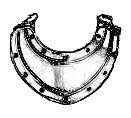
Camail and Gorget
The first attempt to protect the neck was a chain hood called a camail.
While it worked, it was cumbersome and heavy. (+2 DB; +10 max maneuver
penalty)
The camail was later discarded when armorers developed plate neck
protection, called a gorget. Just as protective as the camail, it was
lighter and not nearly as cumbersome, especially since it could be used
to fasten the Spalders to the armor. (+3 DB)
Gauntlets
Hand and finger protection were first leather, but as everything else
transitioned to metal, so did the gauntlets. The design favored by most
semi-spell users are demi-gauntlets, which do not cover the tips of the
fingers or the palm of the hand, both vital for spell casting. (+3 DB)
Plated Chain Armor
Metal plates sewn or riveted onto chain add 20 to DB. This type of Armor
has been used in the Middle East, Central Asia, India, Poland, and
Russia and by the Moors. The Romans had an armor called lorica plumata
that also falls under this category, since it was a chain shirt with
small scales attached to the rings. An expensive armor to make, it was
used only by officers. While it protects well, it is heavy (add 25%
weight) and harder to maneuver in than chain. (Add 15 to min maneuver
penalty, 15 to max maneuver penalty, 10 to quickness penalty and 5 to
missile penalty)
Lamellar sleeves
One of the more frequent add-ons for chain shirts are lamellar sleeves
that go from the shoulder to the wrist. (+5 DB per pair; -5 Missile
Penalty)
If they are used along with greaves on the legs, adding sleeves will
upgrade AT 13 to AT 14 instead of giving a bonus to DB. Lamellar sleeves
can not be added to AT 14, 15 or 16 because these armor types already
have sleeves.
Mixed Armors
Invetitably, a GM will need to hanlde situations in which a character is using mismatched pieces of armor. Here is a quick rule to deal with those kinds of situations:
Base Armor Type
The torso armor protects the most vital parts of the body and thus
determines the base armor type. If it's a chain shirt, then AT 13 is the
base armor type used and any modifications are made in regard to that
armor type. Minimum and maximum maneuver penalties, missile penalties
and quickness penalties are determined by the base AT.
Coverage
After having determined the base armor type, determine what parts of the
body the rest of the armor covers and add the following modifiers to DB.
| Extra covering | DB Modification for Equal or Superior materials | DB Modification for Inferior Materials |
|---|---|---|
| Arm Greaves | +1 to DB per Greave | -1 to DB per Greave |
| Leg Greaves | +2 to DB per Greave | -2 to DB per Greave |
| Sleeves (Covers arms completely) | +2 to DB per Sleeve | -2 to DB per Sleeve |
| Leggings (Covers legs completely) | +3 to DB per Legging | -3 to DB per Legging |
For example, a chain shirt with rigid leather leggings and lamellar
sleeves is treated as AT 15 (-2).
The base AT is chain.
Chain with sleeves and leggings is AT 15.
The leggings are made of an inferior material (-3 per legging = -6 to
DB), while the sleeves are made from lamellar, which is a superior
material (+2 per sleeve = +4 DB).
Organic Armor
Some spell-users venture into combat and at least some of them would like to be protected by armor. The armors presented here are examples of armor that could be developed in a fantasy world in response to the demands of these people. Some of these armors are rather powerful and should not be given away lightly, especially iron silk armor.
Jadeback Armor
These plate armors are made of the natural armor of the giant beetle and the giant scorpion. After the armor pieces have been cut into the desired shape, they are soaked in a chemical bath for almost a year. After the bath, the pieces can only be formed with magic, so most armorers cut first. This bath changes the structure of the plates, so when the armor pieces are taken out of the bath again they are almost as hard as steel, but slightly more flexible and much lighter. The pieces are then made into plate armor. Making these armors is both dangerous (the chemicals are toxic and needs to be handled correctly) and time consuming, but there are several advantages to this kind of armor: Perhaps the most important advantage is that the organic structure of the armor allows spell-casters to use spells while wearing armor. In regards to spell-casting, jadeback armor counts as rigid leather armor.
Jadeback armor is not nearly as hot to be in as metal armors and because it is lighter than steel, it is a lot easier to maneuver in and is not as noisy. The protection of these armors depends on the pieces used: Because these natural plates are hard to come by, almost everything from the creature is used. The smaller pieces or fragments are used in scale armors, while middle-sized pieces used in lamellar armors and the largest plates are used in plate armors.
| Armor | AT | DB Mod | Min Maneuver Penalty | Max Maneuver Penalty | Missile Attack Penalty | Quickness Penalty | |
|---|---|---|---|---|---|---|---|
| Jadeback Scale Armor | Scale Armor | 13 | +5 | -5 | -70 | 0 | 0 |
| Scale Armor with arm and leg protection | 14 | +5 | -15 | -100 | 10 | 5 | |
| Scale Armor Suit | 15 | +5 | -20 | -130 | 20 | 10 | |
| Jadeback Lamellar Armor | Lamellar Armor | 17 | -10 | -10 | -90 | 0 | 10 |
| Lamellar with arm and leg protection | 18 | -10 | -15 | -110 | 10 | 15 | |
| Jadeback Plate Armor | Breastplate | 17 | 0 | -10 | -90 | 0 | 5 |
| Breastplate with upper arm and lower leg protection | 18 | 0 | -15 | -110 | 10 | 15 | |
| Breastplate with full arm and leg protection. | 19 | 0 | -20 | -150 | 30 | 20 |
Note that jadeback plate is not magical armor. These armors have been made on demand and thus come in many size and shapes. The cost is 3 times that of normal armor.
Demon-bone armor
As hard as steel, but much lighter, demon bone is an excellent armor material. Unfortunately it is also very hard to obtain since most demons disintegrate when killed; the only source of demon bone is from demons that have been slain on an outer-plane with a holy or slaying weapon. Another factor is that demons have to reach a certain age before their bones turn really hard. It is not difficult to understand why this material is considered extremely rare and every piece is used. Demon chain armor is similar to ordinary chain armor, but is made by cutting the smaller bones into small rings and then magically linking these rings, thus creating a chain armor. Bones too big to be used in a demon-bone chain are cut into small rectangular plates and then attached to each other with lacing, creating a lamellar armor. Making these armors is both difficult and time consuming, but there are several advantages to this kind of armor: Perhaps the most important advantage is that the organic structure of the armor allows channeling spell-casters to use spells while wearing armor. The bones are also very resilient to cold and fire, making the armor more durable. Because it is lighter than steel, demon-bone armors are easier to maneuver in than their metal counterparts. Alchemists also like demon-bone due to the fact that it is much easier to enchant than normal metal; these armors are frequently heavily enchanted. Demon-bone armor counts as magical armor against armor cleaving weapons and other destructive magic.
| Armor | AT | DB Mod | Min Maneuver Penalty | Max Maneuver Penalty | Missile Attack Penalty | Quickness Penalty | |
|---|---|---|---|---|---|---|---|
| Demon-bone Chain | Chain shirt | 13 | 0 | -5 | -70 | 0 | 0 |
| Chain shirt with upper arm and lower leg protection | 14 | 0 | -10 | -90 | 10 | 5 | |
| Chain shirt with full arm and leg protection | 15 | 0 | -20 | -120 | 20 | 10 | |
| Demon-Bone Lamellar | Lamellar Armor | 17 | 0 | -15 | -90 | 0 | 10 |
| Lamellar with arm and leg protection | 18 | 0 | -20 | -110 | 10 | 20 |
Iron silk armor
Rare and expensive, iron silk is only made in the few places in the
world where the iron spider lives. It's harvested and treated like
normal silk, but after it has been cut and sewn into clothes, it is
treated with special chemicals that give the iron silk its special
ability to absorb damage: It's almost impossible to cut and when hit it
stiffens and spread the impact over a much greater area, thus lessening
the damage to the wearer. This also means that it's impossible to cut
and sew by normal means after it has been treated, but fortunately iron
silk can and will stretch somewhat. Unlike normal silk, iron silk has
good fire resistance, but concentrated magical fire will burn through
it. Due to the chemical treatment, iron silk is always either black or
strongly coloured. Iron silk is often worn under normal clothes by
nobles, kings and others that can afford it as a hidden armor, but the
people that treasure iron silk the most are spell casters: Because iron
silk is cloth it does not impede spell-casting and equally important, it
doesn't take any skill to use. Martial artists similarly treasure this
form of armor because they can use Adrenal Defense while wearing it.
Iron silk protects as rigid leather with no penalties of any kind.
A shirt protect as AT 9.
Shirt and pants or a robe protect as AT 11
Shirt and pants with a robe of iron silk over it protects as AT 12.
It can also be used with other armors and when used with a chain shirt (AT 13) or breastplate (AT 17) it gives a +15 bonus to DB. With chain shirt or breastplate and greaves (AT 14 and 18) it gives a +10 bonus to DB.
Normal Abilities:
AT 9-12, encumbers as AT 2
Does not impede spell-casting
Sometimes iron silk clothes will have additional protections woven into them in the form of runes. Most often these are wardings against fire, lightning or both, since these two elements can damage the clothes and remove the protection.